
Are you ready for summer?
The summer months are finally upon us and while many of us welcome the sunshine and warmer weather, it is important to remember the various health problems summer can bring that might affect you or your family.
Pharmacies
Pharmacists are trained medicine experts who can give you advice on treating a range of common conditions and minor injuries such as:
- sunburn
- insect bites
- hayfever
- skin rashes
You don't need to make an appointment to visit your local pharmacist, and many pharmacies are open during the evening and at weekends. Find your nearest pharmacy.
Not sure what to do?
If you need medical help fast, but it’s not a 999 emergency; or you need to access a local medical service but you're not sure which one, start with NHS 111.
NHS 111 is available 24 hours a day, 365 days a year. Visit the NHS 111 website or call 111 free from your landline or mobile phone.
Trained advisors will ask you a series of questions to assess your symptoms and then if necessary, book an appointment for you to attend a local healthcare service. If the NHS 111 team think you need an ambulance, they will send one immediately.
There are some easy ways to stay safe when the heat arrives:
- Look out for others, especially older people, young children and babies and those with underlying health conditions.
- Close curtains on rooms that face the sun to keep indoor spaces cooler and remember it may be cooler outdoors than indoors.
- Drink plenty of water and avoid alcoholic and caffeinated drinks which can make you dehydrated.
- Never leave anyone in a closed, parked vehicle, especially infants, young children or animals.
- Walk in the shade, apply sunscreen and wear a hat if you must go out in the heat, and try to keep out of the sun between 11am and 3pm.
- Take care and follow local safety advice if you are going into the water to cool down.
- Avoid physical exertion in the hottest parts of the day - save tasks like mowing the grass for the evening or first thing in the morning.
- Wear light, loose fitting cotton clothes.
- Make sure you take water with you if you are travelling.
- putting Petroleum Jelly around your nostrils to trap pollen
- wearing wraparound sunglasses to stop pollen getting into your eyes
- showering and changing your clothes after you’ve been outside to wash pollen off
- staying indoors whenever possible
- keeping windows and doors shut as much as possible
- vacuuming regularly and dusting with a damp cloth
There are lots of different medications available to help ease your symptoms. Ask your local pharmacist for advice on the right treatment for you.
There are some simple precautions you can take to reduce your risk of being bitten or stung by insects. It's particularly important to follow this advice if you've had a bad reaction to an insect bite or sting in the past or you're travelling to an area where there's a risk of picking up a serious illness.
The following measures can help you avoid insect bites and stings:
- Cover exposed skin – if you're outside at a time of day when insects are particularly active, such as sunrise or sunset, wearing loose clothing and keeping shoes on can help you avoid bites. Apply insect repellent to exposed skin – repellents that contain 50% DEET (diethyltoluamide) are most effective.
- Be mindful that mosquitoes and horseflies are commonly found near water.
Ticks
Ticks are small spider-like creatures that are mainly found in woodland, heathland and areas with long grass, including in urban parks. They attach to your skin, and bite to suck blood. Bacteria in the ticks can lead to Lyme disease in some cases.
You can reduce your risk of being bitten by a tick if you:
- Keep to footpaths and avoid areas of long grass when out walking
- Wear appropriate clothing in tick-infested areas (a long-sleeved shirt and trousers)
- Check yourself for ticks when you have walked in these habitats, and check again at the end of the day to remove any ticks
- Wear light-coloured fabrics that may help you spot a tick on your clothes
- Use insect repellent on exposed skin
- Inspect your skin for ticks, particularly at the end of the day, including on your legs, arms and groin area, and particularly for children, check around the head, neck and skin folds (armpits, groin, and waistband) and check your children and any pets. It’s important you remove ticks as soon as possible if you find them on your skin.
Travelling abroad this year?
If you're planning to travel outside the UK, check health information for your destination before you go. You may need vaccines to protect you from serious diseases found in some parts of the world and may also need medication, for example to protect you against malaria.
Check the advice for your destination on TravelHealthPro and speak to your practice nurse, GP, pharmacist or a travel clinic ideally 4-6 weeks before travel to get appropriate advice for your trip. They can give you information about vaccinations and any extra precautions or medication you might need to take.
Be sure to check the COVID-19 rules and entry requirements for the country you are travelling to.
- Vaccines can prevent a number of different infections including some of the illnesses spread through food and water and some of the diseases spread by insects, such as yellow fever or Japanese encephalitis. However, there are a number of diseases which are not vaccine preventable. Take basic precautions with food and water and insect bite avoidance, carry a basic first aid kit to manage common problems and know when to see medical help
- Rabies is found throughout the world and all animals can catch rabies and pass it on. Avoid contact with wild and domestic animals where possible. If you are bitten, scratched or licked on broken skin, immediately wash the area thoroughly with soap and water, and seek medical attention locally. You may be advised to start rabies post-exposure treatment, but always contact your GP on return to the UK to complete any treatment required. Further information about rabies is available in this leaflet for travellers. Check whether you’re visiting a place where rabies is present in animals and consider having a course of pre-exposure rabies vaccines if you are undertaking activities that might put you at greater risk of contact with animals or if you are visiting remote areas where medical care may not be readily available.
Self-care
Self-care means making sure you are stocked up with over-the-counter medicines and a first aid kit so that you are able to treat common illnesses and injuries yourself. It's a good idea to pack basic supplies if you are going away and ensure you stay up to date with any prescribed medication so you don't run out.
Get stocked up with these summer essentials, most of which can be purchased at your local pharmacy:
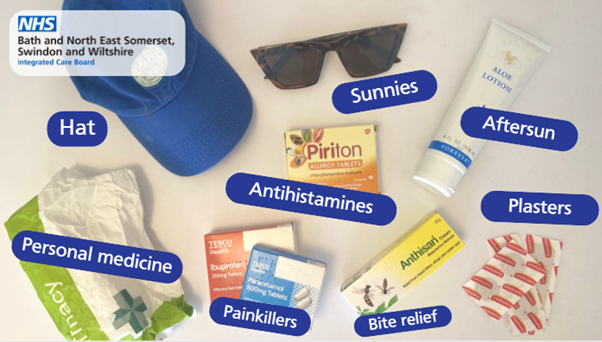
More information about how to treat common illnesses at home is available on the NHS website.
Your Wellbeing
The summer holidays can be a stressful time so it's important to look after your mental health and wellbeing. For local support and resources, visit our mental health page.
If you or someone you know is experiencing a crisis and need urgent mental health support contact 111 or visit www.111.nhs.uk